 18% Off
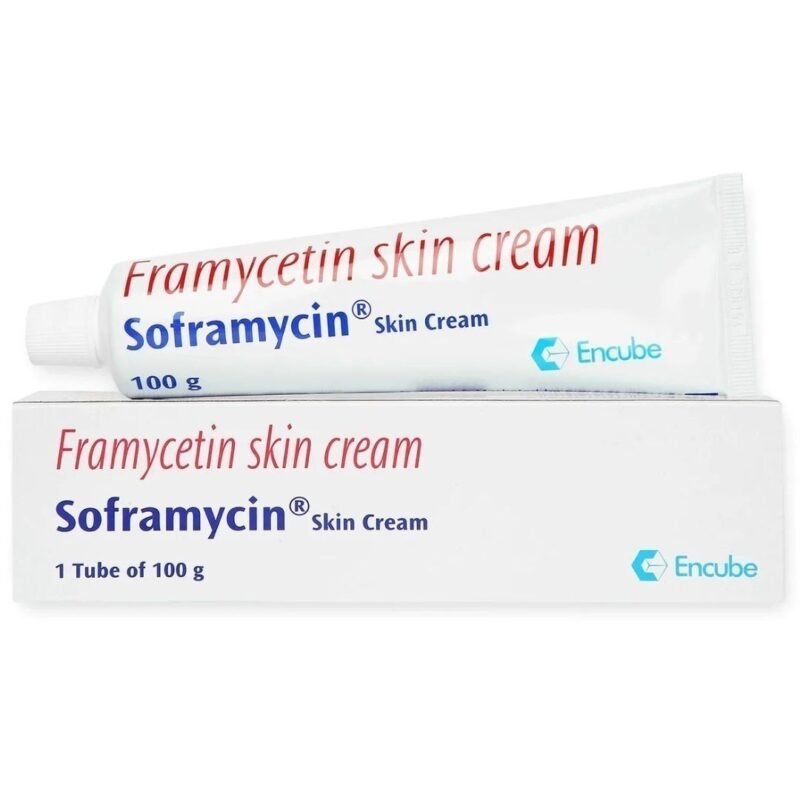
Soframycin Cream
Cream · 1 Cream per Box
- Composition
- —
- Manufacturer
- Sanofi
- Pack
- 1 Cream per Box
- Order within -- and we dispatch today
About Soframycin Cream
Drug: Framycetin Sulphate (Neomycin B) | Class: Topical Aminoglycoside Antibiotic | Brand Reference: Soframycin (Sanofi India) | Indication: Infected wounds, burns, skin ulcers, minor cuts with bacterial infection | Standard Dose: Apply thin layer 2–3 times daily
Framycetin Sulphate 1% Cream 100gm – Topical Aminoglycoside Antibiotic
Framycetin Sulphate 1% Cream 100gm contains Framycetin Sulphate (Neomycin B), a topical aminoglycoside antibiotic indicated for infected wounds, burns, skin ulcers, minor cuts with bacterial infection. British National Formulary (BNF) listed for infected wounds and burns; long-standing clinical use since 1950s.
Product Information
| Attribute | Details |
|---|---|
| Generic Name | Framycetin Sulphate (Neomycin B) |
| Drug Class | Topical Aminoglycoside Antibiotic |
| Brand Reference | Soframycin (Sanofi India) |
| Primary Indication | Infected wounds, burns, skin ulcers, minor cuts with bacterial infection |
| Standard Dose | Apply thin layer 2–3 times daily. Clean wound before application. Cover with sterile dressing |
| Dosage Form | Topical Cream |
| Route | Topical |
| Prescription Required | Yes |
| Evidence Base | British National Formulary (BNF) listed for infected wounds and burns; long-standing clinical use since 1950s |
People Also Ask
What bacteria does framycetin cream treat?
Framycetin (neomycin B) is effective against gram-negative bacteria including Pseudomonas aeruginosa, Escherichia coli, Klebsiella, and Proteus species. It also has activity against some gram-positive organisms including Staphylococcus aureus. It is not effective against Streptococcus pyogenes or anaerobic bacteria.
Can framycetin cream be used on open wounds?
Yes — framycetin cream is specifically indicated for open infected wounds. It is applied as a thin layer directly to the wound bed 2–3 times daily, ideally covered with a sterile dressing. Clean the wound with saline before application. It should not be used on large areas of damaged skin or for prolonged periods due to risk of systemic absorption.
How does framycetin cream compare to mupirocin?
Both are topical antibiotics but with different spectra. Framycetin covers gram-negative organisms making it suitable for wound care (especially burns where Pseudomonas is a concern). Mupirocin specifically targets gram-positive organisms including MRSA — preferred for impetigo and nasal MRSA decolonisation. For general wound infection, framycetin is traditionally used in Asian clinical practice.
Can framycetin be used on burns?
Yes — framycetin cream is a standard topical antibiotic for partial-thickness burns to prevent Pseudomonas and other gram-negative infections. Apply to the burn surface and cover with non-adherent dressing. Change dressings and reapply 2–3 times daily. For deep or large burns, systemic antibiotic therapy is also required.
How long should framycetin cream be used?
Short-term use of 7–10 days is recommended for most wound infections. Prolonged use (over 2 weeks) increases the risk of contact sensitisation (allergic reaction to neomycin) and selection of resistant organisms. If the wound is not improving within 5–7 days, reassess with a healthcare professional.
How it works
Binds 30S ribosomal subunit of bacteria inhibiting protein synthesis, bactericidal against gram-negative organisms — making Framycetin Sulphate effective against infected wounds, burns, skin ulcers, minor cuts with bacterial infection.
Uses
Framycetin Sulphate 1% Cream (brand name Soframycin) is a topical antibiotic used to treat and prevent bacterial infection in wounds, minor burns, skin ulcers, and abrasions. Applied 2–3 times daily to the affected area, it works by killing gram-negative bacteria including Pseudomonas aeruginosa and E. coli. It is one of the most widely used topical antibiotics for wound care in South and Southeast Asia.
Dosage and how to take it
Storage
Store at 15–30°C away from sunlight and moisture. Keep out of reach of children. Do not use past expiry date.



No reviews yet
Be the first to share how it worked for you.