
 56% Off
Sourced directly from Gland Pharma
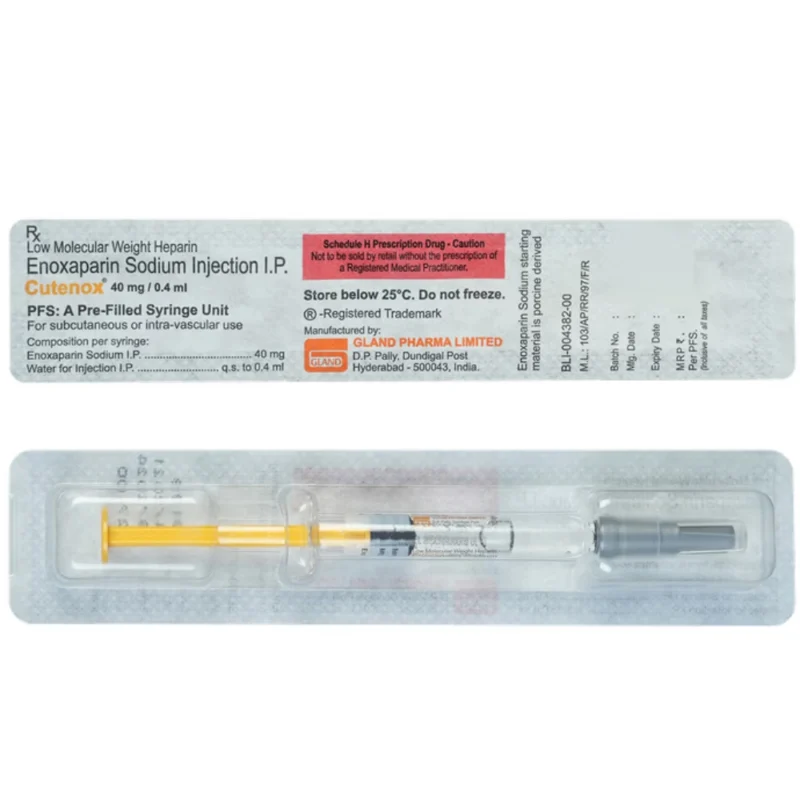
Cutenox 40 mg Injection
Injection · 10 Injections per Pack
$150.00
$340.00
incl. taxes
- Composition
- —
- Manufacturer
- Gland Pharma
- Pack
- 10 Injections per Pack
- Order within -- and we dispatch today
About Cutenox 40 mg Injection
Product Information
| Attribute | Details |
|---|---|
| Generic Name | Enoxaparin Sodium |
| Strength | 40mg/0.4mL |
| Drug Class | Low molecular weight heparin (LMWH) / anticoagulant |
| Manufacturer | Gland Pharma |
| Primary Indication | DVT prophylaxis, pulmonary embolism prevention/treatment |
| Off-Label Use | IVF/recurrent pregnancy loss — clotting-related implantation support |
| Route | Subcutaneous injection (abdomen or thigh) |
| Pack Size | 10 injections per pack |
| Prescription | Required in all markets |
References
- DailyMed (FDA) — Enoxaparin Sodium Injection Prescribing Information
- ScienceDirect — Enoxaparin — Pharmacology Overview
Medically reviewed. Last updated: [21/06/2026]. This content is for informational purposes and does not replace consultation with a licensed physician.
How it works
Enoxaparin is a low molecular weight heparin that inhibits Factor Xa and, to a lesser extent, thrombin, interrupting the coagulation cascade before clots can form or grow. Compared to unfractionated heparin, its more predictable dose-response means it generally doesn't require routine blood monitoring for most indications, which is part of why it's widely used for at-home, self-administered prophylaxis.
Uses
Cutenox 40mg is a low molecular weight heparin (LMWH) injection containing enoxaparin sodium, used primarily to prevent deep vein thrombosis (DVT) and pulmonary embolism (PE) in surgical and immobile patients, and also used off-label in IVF and recurrent pregnancy loss to support uterine blood flow and implantation. It is manufactured by Gland Pharma and administered as a subcutaneous injection, typically self-administered after training.
What Cutenox 40mg Is Used For
- DVT prevention: standard prophylaxis for surgical patients (especially orthopedic and abdominal surgery) and immobile hospitalized patients at risk of clot formation
- Pulmonary embolism: used in both prevention and as part of treatment for confirmed PE, often alongside other anticoagulation management
- Unstable angina / acute MI: used in some cardiovascular protocols to reduce clot-related complications
- IVF and recurrent pregnancy loss (off-label): used in women with clotting disorders such as antiphospholipid syndrome to support uterine blood flow and reduce miscarriage risk linked to micro-clotting
Dosage and how to take it
Dosing depends on indication and body weight, and must be set by a prescribing physician — typical DVT prophylaxis dosing is 40mg once daily, given subcutaneously.
- Inject subcutaneously into the abdomen (alternating sides) or thigh, never intramuscularly
- Do not expel the air bubble from prefilled syringes before injecting — it's part of the dosing mechanism
- Rotate injection sites to reduce bruising and irritation
- Do not rub the injection site after administering
- Patients with reduced kidney function require dose adjustment — inform your doctor of any kidney issues before starting
Possible side effects
The most common side effects are mild bruising or pain at the injection site; the main serious risk to watch for is abnormal bleeding.
- Injection site bruising or pain: common and usually mild
- Minor bleeding risk: increased tendency to bruise or bleed slightly more easily
- Nausea, dizziness: reported less frequently
Seek medical attention immediately for: unusual or heavy bleeding (nosebleeds, blood in urine/stool, heavy menstrual bleeding), signs of allergic reaction (rash, swelling, breathing difficulty), or sudden back pain/numbness if enoxaparin was used around spinal procedures (risk of spinal hematoma).
Safety
Talk to a doctor first if you are pregnant, breastfeeding, taking other medicines, or have a medical condition.
- Active bleeding disorders: not recommended for patients with active or uncontrolled bleeding
- Kidney function: dose adjustment required for renal impairment, as enoxaparin is cleared renally
- Pregnancy: commonly used in pregnancy for women with diagnosed clotting disorders or recurrent pregnancy loss, under physician supervision
- Drug interactions: avoid combining with NSAIDs, aspirin, or other anticoagulants unless specifically directed by your doctor, due to increased bleeding risk
- Spinal/epidural procedures: timing around spinal anesthesia must be carefully managed by your care team due to spinal hematoma risk
Reviews
–
No reviews yet
Sign in to review
Only members who bought this product can leave a review.

No reviews yet
Be the first to share how it worked for you.