Sourced directly from Healing Pharma
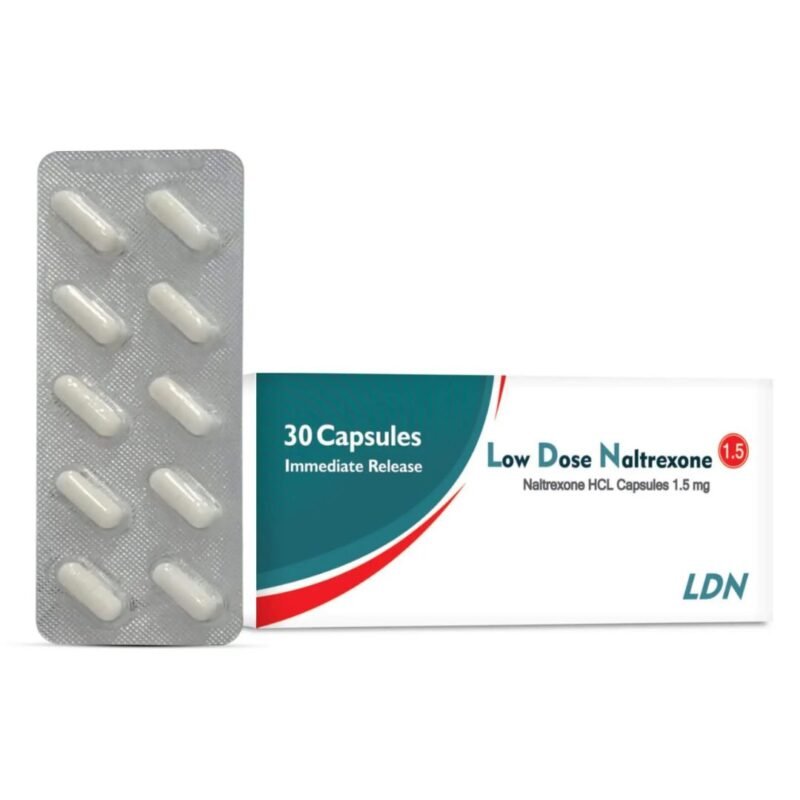
Naltrexone 1.5mg Capsules
Capsules · 30 Capsules per Box
$65.40
$65.40
incl. taxes
- Composition
- —
- Manufacturer
- Healing Pharma
- Pack
- 30 Capsules per Box
Select dosage
In stock · 23 available
- Order within -- and we dispatch today
About Naltrexone 1.5mg Capsules
Naltrexone 1.5mg Capsules contain 1.5mg of naltrexone hydrochloride and are a low-dose formulation commonly referred to as Low-Dose Naltrexone (LDN). LDN uses doses substantially lower than the conventional 50mg oral naltrexone formulation.
Naltrexone is an opioid receptor antagonist. Conventional-dose naltrexone has established regulatory indications, while lower-dose regimens such as 1.5mg are used by some healthcare professionals for selected off-label applications. LDN is not a separately approved drug; it refers to lower-dose use of naltrexone.
The 1.5mg strength can be particularly relevant when a clinician wants to use a lower starting LDN dose or gradually adjust treatment according to individual tolerance and clinical response.
Product Information
- Generic Name
- Naltrexone Hydrochloride
- Strength
- 1.5mg
- Dosage Form
- Oral Capsule
- Common Name
- Low-Dose Naltrexone (LDN)
- Drug Class
- Opioid Antagonist
- Active Ingredient
- Naltrexone Hydrochloride
- Route
- Oral
- Prescription
- Yes
- Formulation
- Capsule; may be compounded depending on market and pharmacy
- LDN Indications
- Selected off-label applications
- Standard Oral Naltrexone Strength
- 50mg
- Pack Size
- Manufacturer/pharmacy dependent
What Is Naltrexone 1.5mg?
Naltrexone 1.5mg is a lower-dose oral formulation of naltrexone.
The term LDN (Low-Dose Naltrexone) is commonly used for naltrexone administered at doses substantially below the conventional 50mg oral dose. Published LDN research has investigated a range of doses, including doses around 1.5mg, 3mg and 4.5mg.
A 2026 review of the LDN literature identified studies using doses generally ranging from approximately 0.5mg to 6mg, although the authors emphasized that evidence remains heterogeneous and does not establish routine LDN treatment across all proposed conditions.
Naltrexone 1.5mg vs Naltrexone 3mg vs 4.5mg
All three are commonly searched as LDN formulations, but the amount of active ingredient differs:
| Product | Strength | Common LDN Positioning |
|---|---|---|
| Naltrexone 1.5mg | 1.5mg | Lower-dose / individualized LDN |
| Naltrexone 3mg | 3mg | Intermediate LDN strength |
| Naltrexone 4.5mg | 4.5mg | Frequently studied LDN strength |
| Naltrexone 50mg | 50mg | Conventional-dose naltrexone |
The correct strength depends on the prescribing clinician's treatment plan. 1.5mg should not automatically be increased to 3mg or 4.5mg without medical guidance.
Naltrexone 1.5mg for Chronic Pain
Naltrexone 1.5mg for chronic pain is a commercially relevant search term within the LDN category.
Low-dose naltrexone has been investigated for chronic pain and centralized pain disorders. Evidence varies by diagnosis, and LDN is generally considered an off-label treatment option rather than an established first-line pain medicine.
A lower strength such as 1.5mg may be selected by a clinician when individualized dosing or gradual dose escalation is appropriate.
Naltrexone 1.5mg for Fibromyalgia
LDN for fibromyalgia is one of the most recognized areas of LDN research.
Clinical studies have investigated low-dose naltrexone for fibromyalgia symptoms, including pain. Some studies and reviews report potential benefit, but the overall evidence remains limited compared with established fibromyalgia treatments.
Naltrexone 1.5mg should therefore be described as an off-label LDN formulation, not as an FDA-approved fibromyalgia treatment.
Naltrexone 1.5mg for Neuropathic Pain
LDN has been investigated for selected neuropathic and centralized pain conditions.
Evidence is still developing, and response may differ between patients. Appropriate diagnosis and clinical evaluation are important before considering LDN.
Naltrexone 1.5mg for Inflammatory Conditions
Low-dose naltrexone is also used off-label by some clinicians for selected inflammatory and immune-mediated conditions.
Research has explored LDN in several areas, but the strength of evidence differs significantly between conditions. Therefore, LDN 1.5mg should not be marketed as a universally established anti-inflammatory treatment.
Naltrexone 1.5mg for Dermatological Conditions
LDN has been investigated for selected dermatological conditions, including disorders involving itching, inflammation and immune activity.
Published evidence remains condition-specific. LDN should be prescribed according to the individual diagnosis rather than marketed as a general treatment for skin disease.
Naltrexone 1.5mg for Long COVID
Low-dose naltrexone has attracted interest for symptoms associated with Long COVID, including fatigue, pain, sleep problems and cognitive symptoms.
Research remains limited, particularly because high-quality randomized clinical evidence is lacking for many proposed applications. LDN should not be represented as an approved treatment for Long COVID.
Naltrexone 1.5mg and Opioids
Naltrexone 1.5mg remains an opioid antagonist despite being a low dose.
Patients taking opioid medicines should discuss LDN with their healthcare professional before starting treatment.
This includes medicines such as:
- Morphine
- Oxycodone
- Hydrocodone
- Fentanyl
- Codeine
- Tramadol
- Methadone
- Buprenorphine
- Other opioid-containing medicines
Naltrexone can interfere with opioid analgesia and may precipitate withdrawal in people who are physically dependent on opioids.
LDN 1.5mg and Opioid Painkillers
Patients receiving opioid pain medication should not independently start LDN.
Tell your doctor, dentist, surgeon or emergency healthcare provider that you take naltrexone before any procedure where opioid pain relief might be required.
Do not attempt to overcome naltrexone's opioid blockade by taking higher opioid doses because this can increase overdose risk.
Naltrexone 1.5mg and Liver Function
Naltrexone is metabolized by the liver. Patients with liver disease or abnormal liver function should discuss their medical history with their healthcare professional before treatment.
Seek medical attention if symptoms such as dark urine, yellowing of the skin or eyes, persistent abdominal pain or unusual fatigue develop.
Naltrexone 1.5mg and Alcohol
Conventional oral naltrexone at 50mg has an established role in the treatment of alcohol dependence.
However, LDN 1.5mg should not be presented as equivalent to the conventional 50mg regimen for alcohol dependence. The lower-dose LDN application is clinically distinct.
Naltrexone 1.5mg and Weight Loss
Naltrexone is sometimes searched online in relation to weight management.
However, Naltrexone 1.5mg alone is not an approved standalone weight-loss medication.
Naltrexone/bupropion is a separate combination medicine containing two active ingredients and should not be confused with LDN capsules.
Naltrexone 1.5mg vs Naltrexone 50mg
Naltrexone 1.5mg and naltrexone 50mg contain the same active ingredient but are used at substantially different doses.
Naltrexone 1.5mg is commonly positioned as an LDN formulation for selected off-label applications.
Naltrexone 50mg is the conventional oral strength associated with established regulatory indications.
They should not be treated as interchangeable products for every indication.
Naltrexone 1.5mg Capsules Availability & Ordering
Naltrexone 1.5mg Capsules are commercially searched as:
Naltrexone 1.5mg Capsules → LDN 1.5mg → Low-Dose Naltrexone 1.5mg → LDN Capsules
Depending on the country, the 1.5mg strength may be supplied through a pharmacy as a compounded prescription formulation.
Commercial search intent includes Naltrexone 1.5mg Capsules, LDN 1.5mg Capsules, Low Dose Naltrexone 1.5mg, Naltrexone 1.5mg Online, Buy LDN 1.5mg, Low Dose Naltrexone Pharmacy, LDN Compounding Pharmacy and Naltrexone 1.5mg Price.
Availability, prescription requirements, compounding rules and import regulations vary across the USA, UK, UAE/Dubai, Australia, Singapore, Thailand, China and Russia.
How it works
Naltrexone primarily acts as an opioid receptor antagonist, blocking opioid receptor activity.
At lower doses, proposed mechanisms of LDN include transient opioid receptor blockade and potential effects on neuroimmune signaling. These mechanisms remain under investigation and should not be presented as established proof of effectiveness for every condition for which LDN is marketed.
The pharmacological action of naltrexone does not mean that LDN is an opioid medicine. Naltrexone is an opioid antagonist, not an opioid agonist.
Dosage and how to take it
Naltrexone 1.5mg is a specific low-dose formulation, but there is no single standardized LDN dosing schedule for all conditions.
Some LDN protocols begin at a lower dose and gradually increase according to tolerability and clinical response. Other protocols may use a different starting strength.
The appropriate dose depends on:
- The condition being treated
- Previous naltrexone exposure
- Other medicines
- Opioid use
- Liver health
- Individual tolerance
- Prescriber treatment strategy
Do not change the LDN dose without medical advice.
Possible side effects
Possible naltrexone-related adverse effects include:
- Nausea
- Headache
- Dizziness
- Fatigue
- Sleep disturbance
- Insomnia
- Abdominal discomfort
- Diarrhea
- Nervousness or anxiety
Individual tolerability varies. Contact a healthcare professional if side effects are persistent, severe or concerning.
FAQs
What is Naltrexone 1.5mg?
Naltrexone 1.5mg is a low-dose oral formulation of naltrexone hydrochloride commonly marketed or prescribed as Low-Dose Naltrexone (LDN).
What does LDN stand for?
LDN stands for Low-Dose Naltrexone.
Is 1.5mg considered LDN?
Yes. 1.5mg falls within the low-dose range used in LDN research and clinical practice.
What is Naltrexone 1.5mg used for?
Naltrexone 1.5mg may be prescribed off-label for selected conditions, including certain chronic pain, inflammatory, dermatologic and neuroimmune conditions. The evidence varies substantially by condition.
Is Naltrexone 1.5mg FDA approved?
The 1.5mg LDN formulation and its off-label applications should not be represented as FDA-approved indications. Naltrexone has established FDA-approved uses at conventional doses.
Is Naltrexone 1.5mg the same as Naltrexone 50mg?
Both contain naltrexone hydrochloride, but the strengths are substantially different. They should not be considered interchangeable for all clinical uses.
Is LDN 1.5mg used for fibromyalgia?
Low-dose naltrexone has been studied for fibromyalgia and may be prescribed off-label by some clinicians. It is not an FDA-approved fibromyalgia treatment.
Is LDN 1.5mg used for chronic pain?
Yes. Some healthcare professionals use LDN off-label for selected chronic pain conditions, although evidence varies according to the diagnosis.
Can I take LDN 1.5mg with opioid pain medication?
Naltrexone can interfere with opioid medicines and may precipitate withdrawal in opioid-dependent individuals. Patients using opioids should consult their healthcare professional before starting LDN.
Is Naltrexone 1.5mg available online?
Naltrexone is a prescription medicine. A 1.5mg LDN formulation may require pharmacy compounding depending on the country. It should be obtained from an appropriately licensed pharmacy or authorized supplier.
Is LDN 1.5mg available internationally?
Availability and regulatory requirements vary by country. Compounding and prescription requirements may differ between the USA, UK, UAE, Australia, Singapore, Thailand, China and Russia.
Medical Disclaimer: This product information is provided for educational and informational purposes only and is not a substitute for professional medical advice, diagnosis or treatment. Naltrexone 1.5mg/LDN is generally used at a lower dose than conventional naltrexone and may be prescribed off-label for selected conditions. Evidence varies by condition, and LDN should not be represented as an approved treatment for every condition discussed. Naltrexone can interfere with opioid medicines and may precipitate opioid withdrawal. Always disclose opioid use, liver conditions and other relevant medical information to your healthcare professional before starting treatment. Do not start, stop or change LDN treatment without appropriate medical supervision.
Last Updated: August 24, 2026